
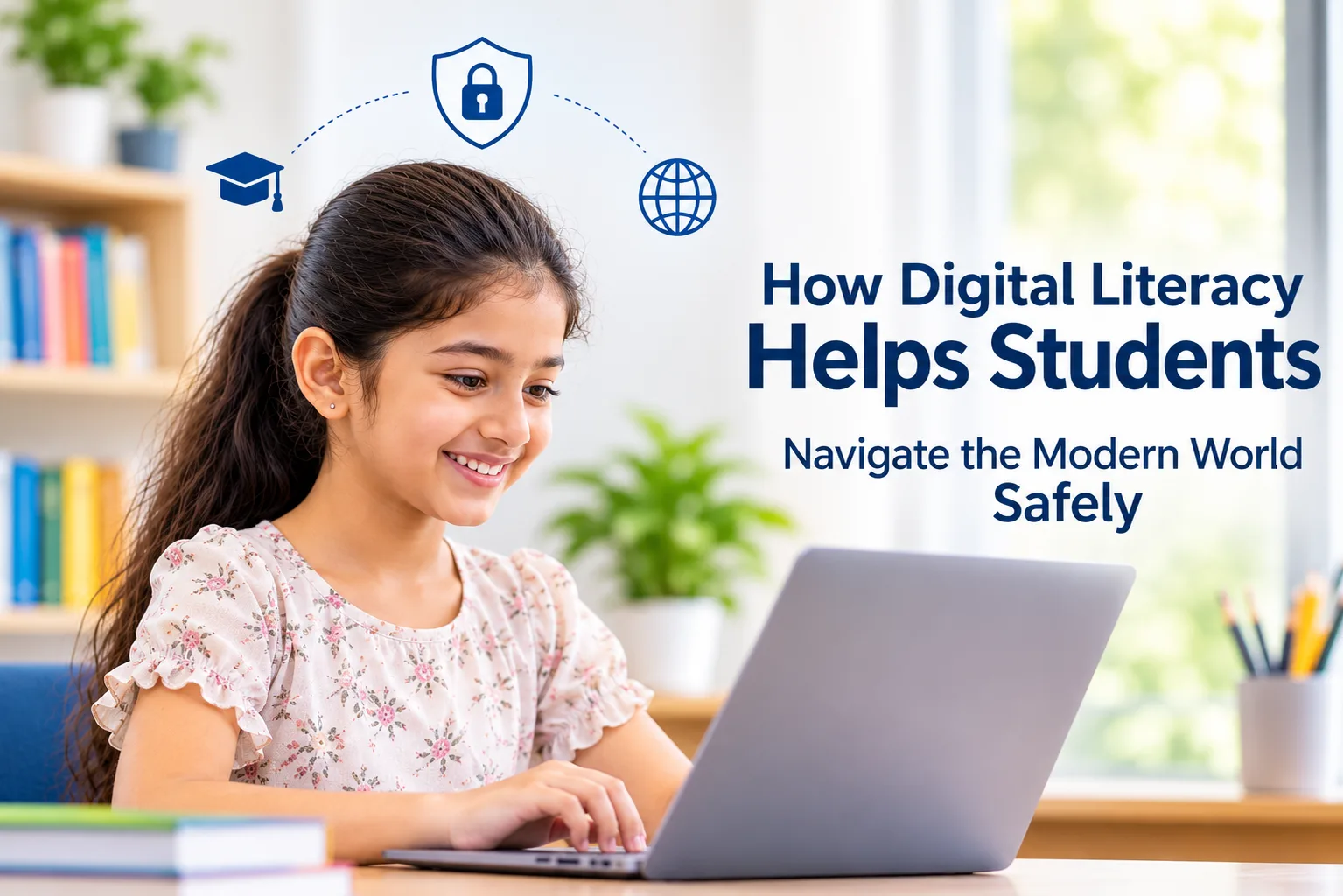
Nowadays, children rely on tech devices (computers, smartphones, tablets) for almost all activities, including online classes, research, and communication. Yes, technology has facilitated education; yet, it still imposes some difficulties for students.
Digital literacy is no longer limited to the knowledge of operating the mentioned devices. Digital literacy now means understanding the technology, learning how to recognize trustworthy information, and secure personal data.
Teens and tweens who become proficient in these skills from an early age will be empowered to use technology wisely and ethically.
What Is Digital Literacy and Why Does It Matter?
Digital literacy means being able to obtain, comprehend, evaluate and utilize information via digital media effectively. It includes the ability to communicate properly with others, recognize the risks involved when using the internet and utilize different technologies in a responsible manner.
These skills are essential for students since the internet provides them with loads of useful information, as well as some unreliable or misleading information. An individual knows how to search for any data, but that does not mean they can decide whether information found is trustworthy and precise.
Schools have an important role in teaching children to distinguish between valuable digital information and fake sources. Thus, digital literacy should be considered an integral part of the education system along with academic knowledge and practical skills.
1. Learning to Identify Reliable Information
Nowadays, it is possible to find a lot of articles, videos and learning materials on the Internet. Still, one must remember that not all information found on the web is trustworthy.
It is important for students to learn how to evaluate the following:
- where the information is taken from,
- which materials are worth referring to,
- whether certain information is misleading or not.
As an illustration, when working on their school tasks, young learners need to check a number of educational sites, books or certain other trustworthy sources instead of copying the first article that appears on the search engine.
2. Understanding Online Privacy and Safety
One of the most important aspects in terms of digital literacy is privacy online. Kids are sometimes unaware of any personal details they disclose on websites, games, social networks or mobile applications. Information like a full name, home address, school information, passwords and pictures deserves protection.
Children need to know the reasons why it is important to:
-
Not give personal data to strangers on the Internet.
-
Create strong and reliable passwords.
-
Do not click on suspicious links or download files from unknown sources.
-
Consult trusted people before using new websites or applications.
-
Report unpleasant messages, cyberbullying or suspicious actions online.
3. Developing Critical Thinking in the Digital World
Digital literacy also teaches students to think before accepting or sharing information. Fake news, edited images, misleading advertisements and AI-generated content can make it difficult to distinguish between what is genuine and what is not.
Students should be encouraged to ask questions such as:
-
Who created this information?
-
Is the source trustworthy?
-
Can I verify this information elsewhere?
-
Is this content trying to influence my opinion?
These questions help students become thoughtful digital users rather than passive consumers of online content.
Learning to evaluate information is particularly valuable in research-based education. At Cambridge schools in Hyderabad, students can benefit from developing research, analytical and independent learning skills that help them approach digital resources more critically.
4. Building Responsible Digital Communication Habits
The way students interact with teachers, peers and friends has been altered by advancements in technology. The introduction of emails, online classes, learning communities, and other messaging platforms has changed how students study.
However, students must remember that online communication is similar to face-to-face communication where one must observe mutual respect, be responsible, observe good manners, and recognize the necessity of choosing his/her words wisely.
Students must cherish politeness, respect others’ opinions, refrain from making nasty remarks, and think about what to post.
Students have to be acquainted with the issue of cyberbullying and know that it can harm a person’s mood as well as his/her self-esteem.
5. Understanding Artificial Intelligence and Digital Tools
The process of education is being transformed by artificial intelligence. AI-based apps can be used by students for studying, language acquisition, creative projects, and grasping complex content.
Moreover, it is crucial for students to know that these tools do not always produce reliable results. The generated information always needs to be verified; students should never completely rely on them.
Educational institutions can organize discussions about the significance of responsible AI usage, originality, plagiarism, and digital ethics based on learners' age.
Creating awareness of emerging technologies can contribute to the understanding of how technology influences learning, communication, and work processes in modern international schools in Hyderabad.
6. How Schools and Parents Can Work Together
Digital literacy should not be limited to technology courses, but should be implemented into everyday learning and discussions at home.
Schools can use more interactive techniques, class discussions, assigned projects, and technology education sessions for students. Teachers can help to learn how to check if the website is reliable, develop a password, or use online learning platforms properly.
Parents must also participate in the process. They can help children not only to restrict their screen time but to engage them in meaningful online activities and talk about their online experiences.
When looking for the best international schools in Hyderabad , parents should understand the school’s approach to technology, responsibility, and online safety.
A strong partnership of parents and teachers can help children build good online habits in school and at home.
7. Encouraging a Healthy Balance Between Screen Time and Real-Life Activities
Digital literacy also necessitates an understanding of when to take a break from technology.
Continual use of digital devices leads to less time available for engaging in physical activity, playing outdoors, talking with others, and doing other useful things. Students must learn to strike a balance between online learning and reading, sports, hobbies, and social life.
Parents and teachers should promote healthy screen time management by setting reasonable limits on the use of devices, filtering content based on age, and allowing technology-free time throughout the day.
The aim is not to keep children from technology but rather to teach them about its proper use.
8. Preparing Students for a Responsible Digital Future
Digital literacy is an essential skill for the next generation. As technology continues to evolve, students will need more than the ability to operate digital devices. They will need the confidence to question information, protect their privacy, communicate respectfully and adapt to new technologies.
When parents compare Cambridge schools in Hyderabad, they should also consider how digital learning and responsible technology use are integrated into the educational experience.
Similarly, international schools in Hyderabad India can help students develop a broader understanding of technology, communication and global digital citizenship.
Choosing among the best international schools in Hyderabad should involve looking beyond academic results and understanding how schools prepare children for real-world challenges. A learning environment that encourages responsible technology use can support students in becoming confident and informed digital citizens.
Conclusion
The ability to use technology effectively is now a necessity instead of an optional skill that young people will discover in life. Young people need guidance on how to take advantage of the benefits and mitigate risks of technology.
By educating children on how to stay safe online, think critically, communicate efficiently and use devices responsibly, parents and schools enable them to make good decisions in the digital world.
In Candiidus International School, teaching children how to be responsible and confident technology users is central to the school’s values.
FAQs
1. What is digital literacy for students?
Digital literacy is the ability to use technology, find reliable information, communicate responsibly and stay safe online.
2. Why is digital literacy important for school students?
It helps students identify misinformation, protect personal information, develop critical thinking and use digital tools effectively.
3. How can parents teach children about online safety?
Parents can encourage strong passwords, limit personal information sharing, monitor online activities and discuss potential internet risks.
4. How does AI help students in education?
AI can support research, language learning, creative activities and understanding complex subjects when used responsibly.
5. How can schools promote digital literacy among students?
Schools can organise digital safety workshops, research activities and interactive lessons that teach responsible technology use.
Discussion
Comments
No comments yet. Be the first to share your thoughts.
Leave a comment
Comments are reviewed before they appear on this page.